
Project description
Project description
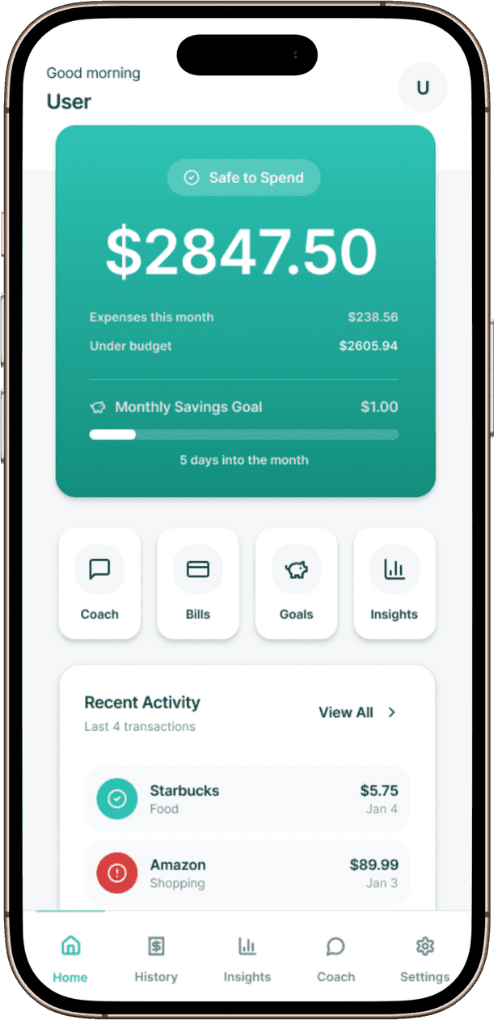
Findo is a proactive financial coaching app that helps users avoid impulsive spending by intervening before a purchase happens. Instead of relying on retrospective charts and budgets, Findo calculates a real-time Safe-to-Spend amount and explains financial consequences at the moment of decision.
I designed Findo to move financial literacy from passive awareness into real-time behavioral guidance, using calm, conversational interventions rather than restriction or shame.
Findo is a proactive financial coaching app that helps users avoid impulsive spending by intervening before a purchase happens. Instead of relying on retrospective charts and budgets, Findo calculates a real-time Safe-to-Spend amount and explains financial consequences at the moment of decision.
I designed Findo to move financial literacy from passive awareness into real-time behavioral guidance, using calm, conversational interventions rather than restriction or shame.
Problem
Problem
• Budgeting apps are retrospective, not
preventative
• Financial stress often occurs at the
moment of impulse, not during planning
• Users see balances without future
context
• Charts and categories create cognitive
overload
Key issues identified:
Most personal finance apps fail to change user behavior.
Most personal finance apps fail to change user behavior.
Design Challenge:
How might we improve spending decisions at the moment of purchase?
Key issues identified:
•
Budgeting apps are retrospective, not preventative
•
Users see balances without future context
•
Charts and categories create cognitive overload
•
Financial stress often occurs at the moment of impulse, not during planning
Design Challenge:
How might we improve spending decisions at the moment of purchase?
Research & Insights
Research & Insights
Research Methods
Research Methods
Competitive analysis (Mint, Rocket Money, Copilot)
Competitive analysis (Mint, Rocket Money, Copilot)
User pain-point synthesis from financial forums and reviews
User pain-point synthesis from financial forums and reviews
Behavioral finance principles
Behavioral finance principles
Product teardowns of SMS-first fintech tools
Competitive analysis (Mint, Rocket Money, Copilot)
Competitive analysis (Mint, Rocket Money, Copilot)
User pain-point synthesis from financial forums and reviews
User pain-point synthesis from financial forums and reviews
Behavioral finance principles
Behavioral finance principles
Product teardowns of SMS-first fintech tools
Key Insights
Key Insights
Timing matters more than data
Users don't check finance apps before purchases.
Users don't check finance apps before purchases.
Timing matters more than data
Friction can be helpful
Small, well-timed interruptions reduce impulsive behavior.
Friction can be helpful
Small, well-timed interruptions reduce impulsive behavior.
Context beats totals
Knowing why money can't be spent is more effective than seeing a number.
Knowing why money can't be spent is more effective than seeing a number.
Context beats totals
Shame-based messaging fails
Users respond better to calm, explanatory language.
Shame-based messaging fails
Users respond better to calm, explanatory language.
These insights shaped Findo's core intervention-first experience
These insights shaped Findo's core intervention-first experience
Personas
Personas
Primary Persona: The Impulsive Optimizer
Primary Persona: The Impulsive Optimizer
Age
25
Profile
Early-career professional, digitally savvy, income is stable but spending is inconsistent
Goals
• Avoid financial stress
• Build savings without rigid budgeting
• Feel confident about everyday purchases
Needs
• Real-time guidance
• Simple explanations
• Non-judgmental support
Pain Points
• Overestimates disposable income
• Forgets about upcoming bills
• Feels guilty after spending mistakes
Age
25
Needs
• Real-time guidance
• Simple explanations
• Non-judgmental support
Profile
Early-career professional, digitally savvy, income is stable but spending is inconsistent
Pain Points
• Overestimates disposable income
• Forgets about upcoming bills
• Feels guilty after spending
mistakes
Goals
• Avoid financial stress
• Build savings without rigid budgeting
• Feel confident about everyday
purchases
Secondary Persona: The Anxious Planner
Secondary Persona: The Anxious Planner
Age
38
Profile
Mid-career professional with irregular income or freelance work, highly organized but anxious about financial uncertainty
Goals
• Maintain financial cushion for emergencies
• Feel secure about variable expenses
• Reduce money-related anxiety
Needs
• Reassurance and clarity
• Buffer calculations for irregular income
• Stress-free spending approval
Pain Points
• Overthinks every purchase decision
• Struggles with fluctuating income
• Constantly checks account balances
Age
38
Needs
• Reassurance and clarity
• Buffer calculations for irregular income
• Stress-free spending approval
Profile
Mid-career professional with irregular income or freelance work, highly organized but anxious about financial uncertainty
Pain Points
• Overthinks every purchase
decision
• Struggles with fluctuating income
• Constantly checks account
balances
Goals
• Maintain financial cushion for
emergencies
• Feel secure about variable
expenses
• Reduce money-related anxiety
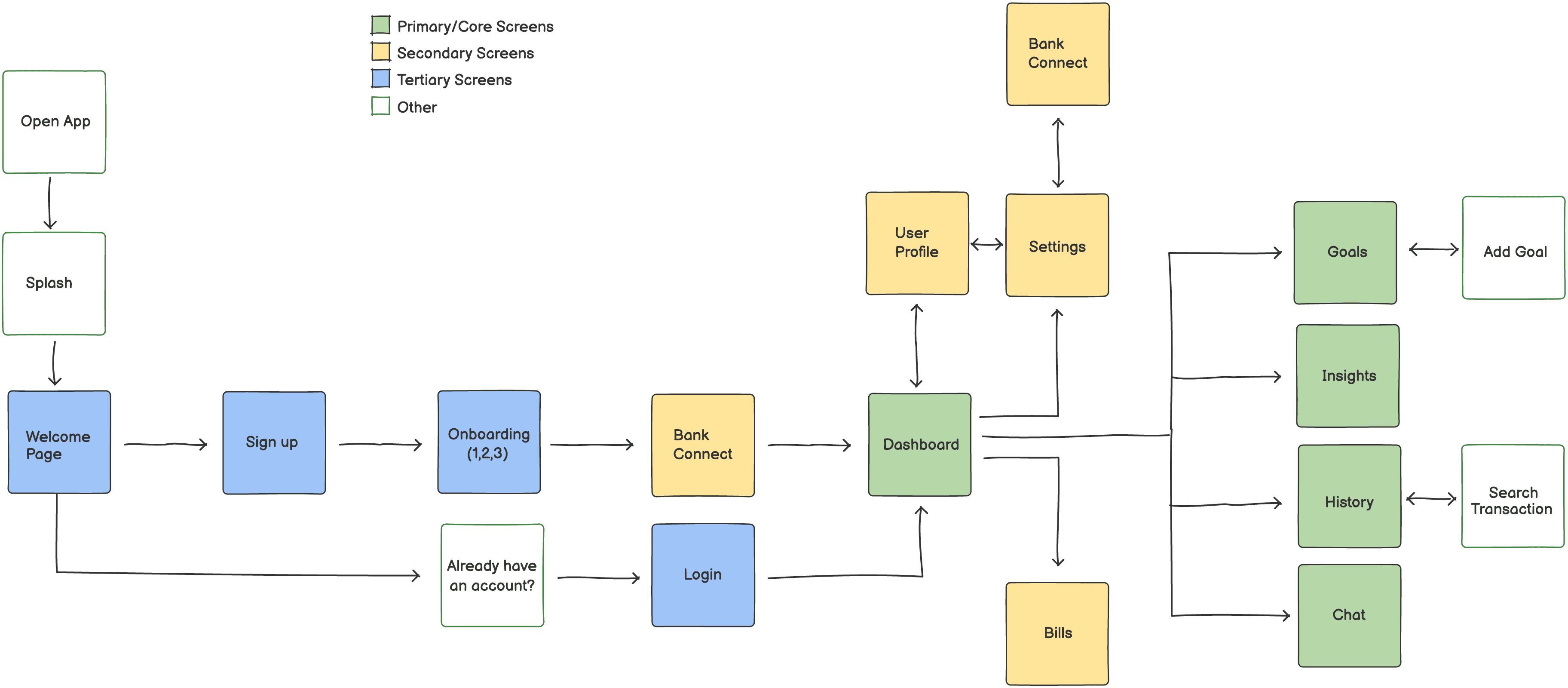
User Flow
User Flow
Design Validation
Concept Testing Methods
• User scenario walkthroughs with 8 participants
• Prototype testing for intervention timing and messaging
• Comparative analysis against existing fintech solutions
Key Findings
• Users preferred contextual guidance over budget restrictions
• SMS intervention felt less intrusive than app notifications
• Safe-to-Spend concept resonated strongly with target users
Design Validation
Design Validation
Concept Testing Methods
• User scenario walkthroughs
with 8 participants
• Prototype testing for
intervention timing and
messaging
• Comparative analysis against
existing fintech solutions
Key Findings
• Users preferred contextual
guidance over budget
restrictions
• SMS intervention felt less
intrusive than app
notifications
• Safe-to-Spend concept
resonated strongly with
target users
Design Validation
User Feedback (Concept Testing)
Gary, 35
Working Professional
"This would actually stop me from making dumb purchases. I love that it explains WHY I shouldn't spend, not just tells me no."
Kate, 24
University Student
"I've tried budgeting apps before but never stick with them. This feels different, like it's helping me in the moment, not judging me after."
User Feedback
(Concept Testing)
User Feedback (Concept Testing)
Gary, 35
Working Professional
"This would actually stop me from making dumb purchases. I love that it explains WHY I shouldn't spend, not just tells me no."
Kate, 24
University Student
"I've tried budgeting apps before but never stick with them. This feels different, like it's helping me in the moment, not judging me after."
User Feedback
(Concept Testing)
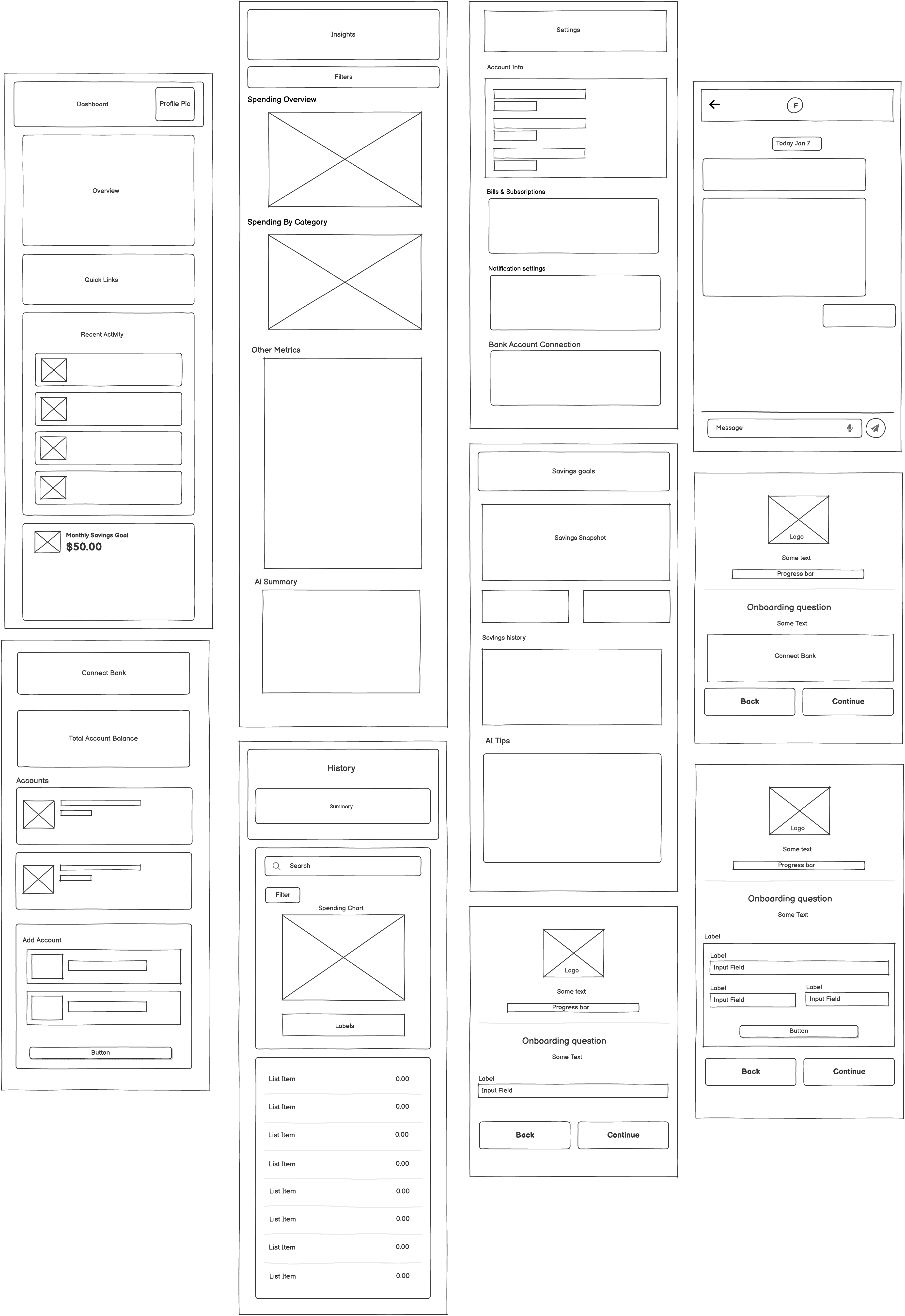
Low-Fidelity Wireframes
Low-Fidelity Wireframes
Hi-Fidelity Wireframes
Hi-Fidelity Wireframes
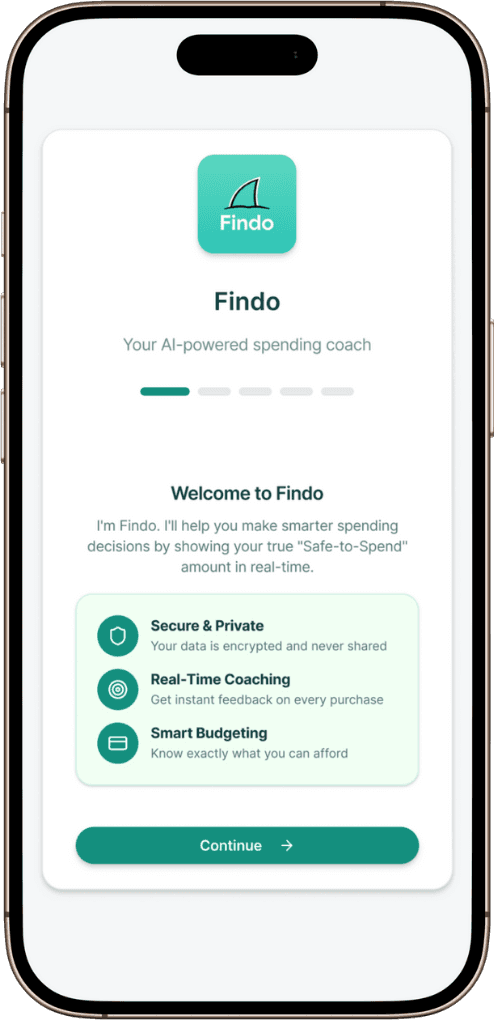
Onboarding
AI algorithms analyze user preferences and priorities to generate optimized savings plan.
DashBoard
A simple dashboard showing spending, savings goals, and recent transactions at a glance.
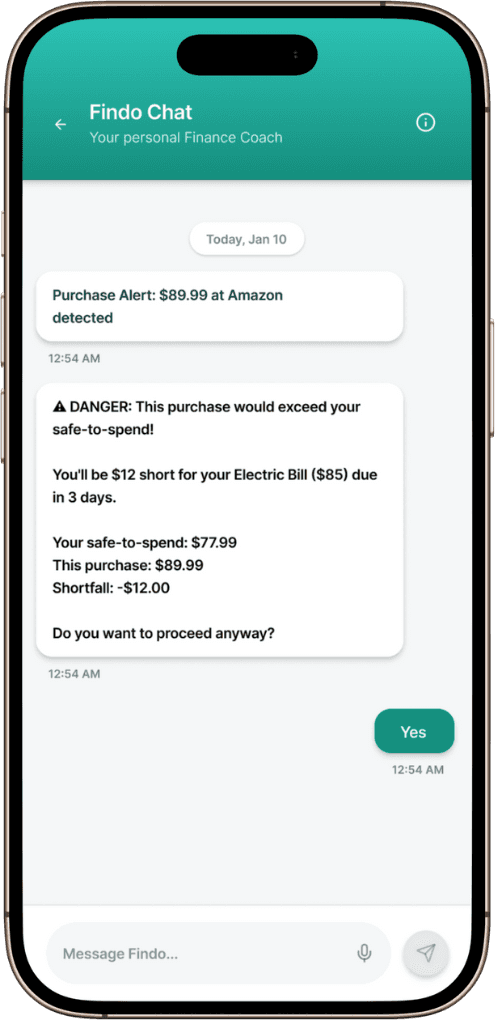
FIndo Chat
Real-time finance coach that warns users before overspending and accounts for upcoming bills.
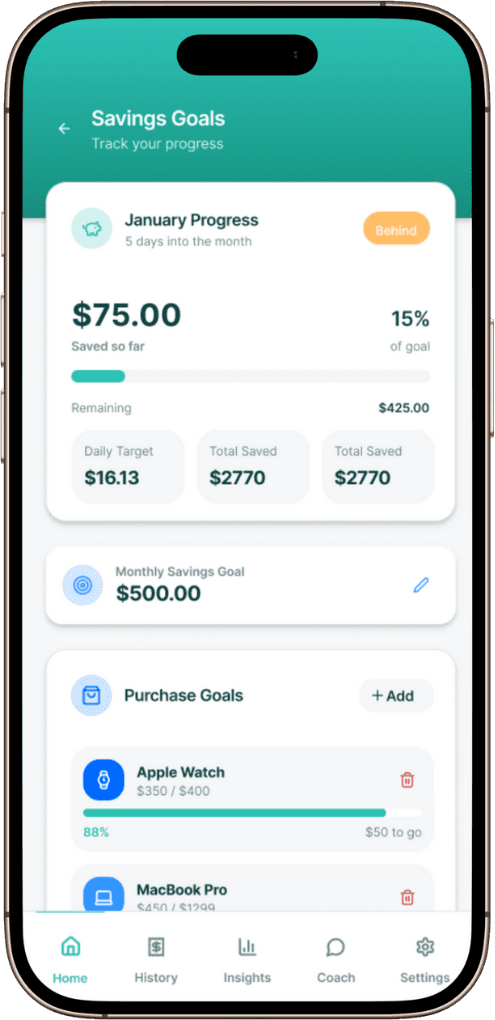
Savings Goals
Customizable goals let users track savings and major purchases in one view.
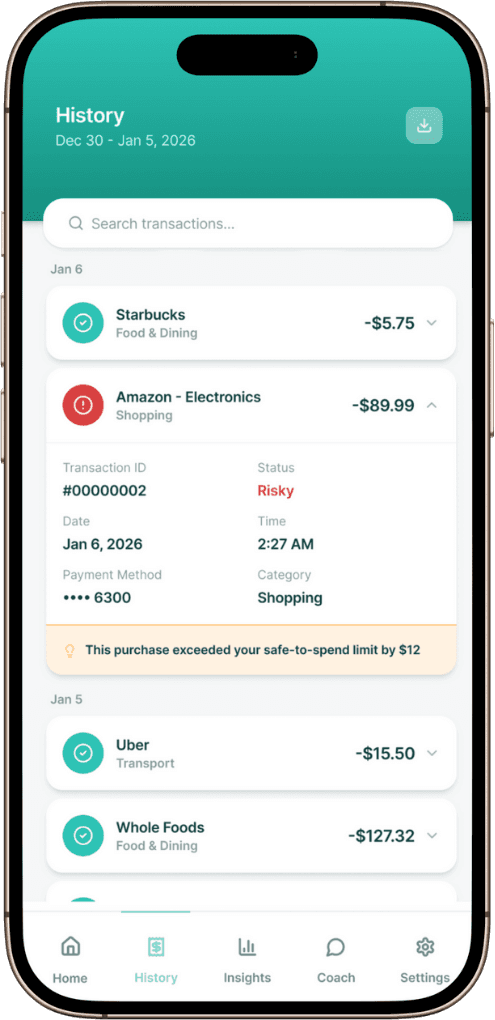
Transaction History
Smart transaction tracking lets users view, search, and analyze spending with risk flags.
Insights
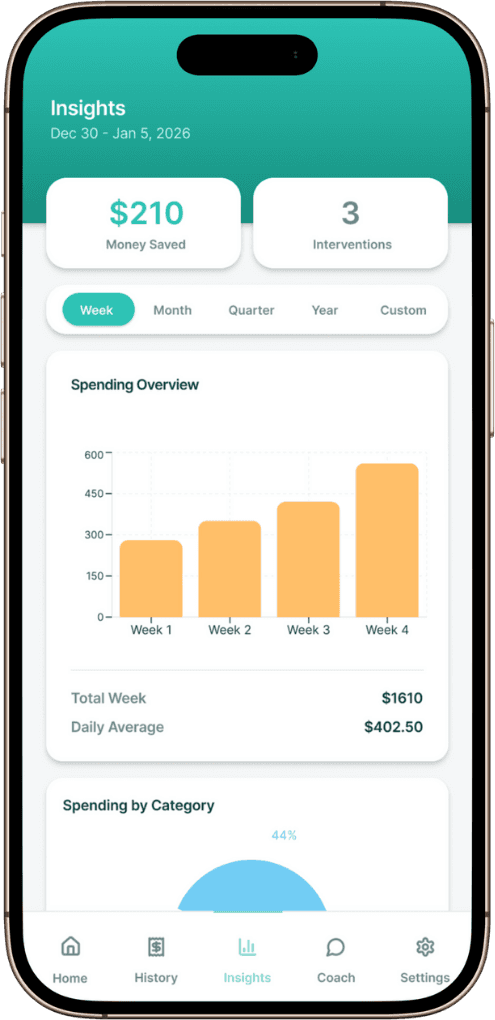
Personalized analytics visualize spending, savings, and financial patterns through clear charts.
Onboarding
AI algorithms analyze user preferences and priorities to generate optimized savings plan.
DashBoard
A simple dashboard showing spending, savings goals, and recent transactions at a glance.
FIndo Chat
Real-time finance coach that warns users before overspending and accounts for upcoming bills.
Savings Goals
Customizable goals let users track savings and major purchases in one view.
Transaction History
Smart transaction tracking lets users view, search, and analyze spending with risk flags.
Insights
Personalized analytics visualize spending, savings, and financial patterns through clear charts.
Onboarding
AI algorithms analyze user preferences and priorities to generate optimized savings plan.
DashBoard
A simple dashboard showing spending, savings goals, and recent transactions at a glance.
FIndo Chat
Real-time finance coach that warns users before overspending and accounts for upcoming bills.
Savings Goals
Customizable goals let users track savings and major purchases in one view.
Transaction History
Smart transaction tracking lets users view, search, and analyze spending with risk flags.
Insights
Personalized analytics visualize spending, savings, and financial patterns through clear charts.
Onboarding
AI algorithms analyze user preferences and priorities to generate optimized savings plan.
DashBoard
A simple dashboard showing spending, savings goals, and recent transactions at a glance.
FIndo Chat
Real-time finance coach that warns users before overspending and accounts for upcoming bills.
Savings Goals
Customizable goals let users track savings and major purchases in one view.
Transaction History
Smart transaction tracking lets users view, search, and analyze spending with risk flags.
Insights
Personalized analytics visualize spending, savings, and financial patterns through clear charts.
Onboarding
AI algorithms analyze user preferences and priorities to generate optimized savings plan.
DashBoard
A simple dashboard showing spending, savings goals, and recent transactions at a glance.
FIndo Chat
Real-time finance coach that warns users before overspending and accounts for upcoming bills.
Savings Goals
Customizable goals let users track savings and major purchases in one view.
Transaction History
Smart transaction tracking lets users view, search, and analyze spending with risk flags.
Insights
Personalized analytics visualize spending, savings, and financial patterns through clear charts.
Onboarding
AI algorithms analyze user preferences and priorities to generate optimized savings plan.
DashBoard
A simple dashboard showing spending, savings goals, and recent transactions at a glance.
FIndo Chat
Real-time finance coach that warns users before overspending and accounts for upcoming bills.
Savings Goals
Customizable goals let users track savings and major purchases in one view.
Transaction History
Smart transaction tracking lets users view, search, and analyze spending with risk flags.
Insights
Personalized analytics visualize spending, savings, and financial patterns through clear charts.
Onboarding
AI algorithms analyze user preferences and priorities to generate optimized savings plan.
DashBoard
A simple dashboard showing spending, savings goals, and recent transactions at a glance.
FIndo Chat
Real-time finance coach that warns users before overspending and accounts for upcoming bills.
Savings Goals
Customizable goals let users track savings and major purchases in one view.
Transaction History
Smart transaction tracking lets users view, search, and analyze spending with risk flags.
Insights
Personalized analytics visualize spending, savings, and financial patterns through clear charts.
Onboarding
AI algorithms analyze user preferences and priorities to generate optimized savings plan.
DashBoard
A simple dashboard showing spending, savings goals, and recent transactions at a glance.
FIndo Chat
Real-time finance coach that warns users before overspending and accounts for upcoming bills.
Savings Goals
Customizable goals let users track savings and major purchases in one view.
Transaction History
Smart transaction tracking lets users view, search, and analyze spending with risk flags.
Insights
Personalized analytics visualize spending, savings, and financial patterns through clear charts.
How Feedback Shaped the Design
Jada, 28
University Student
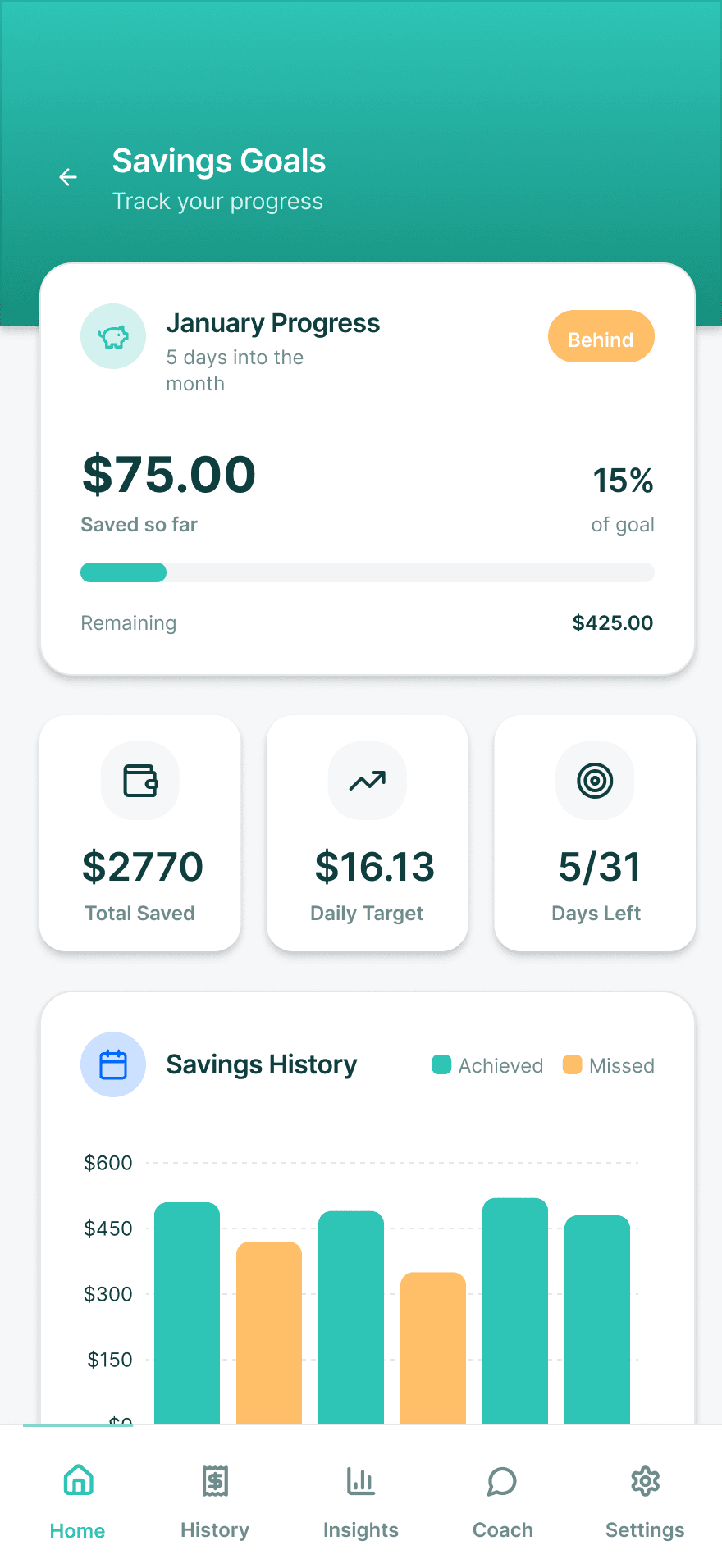
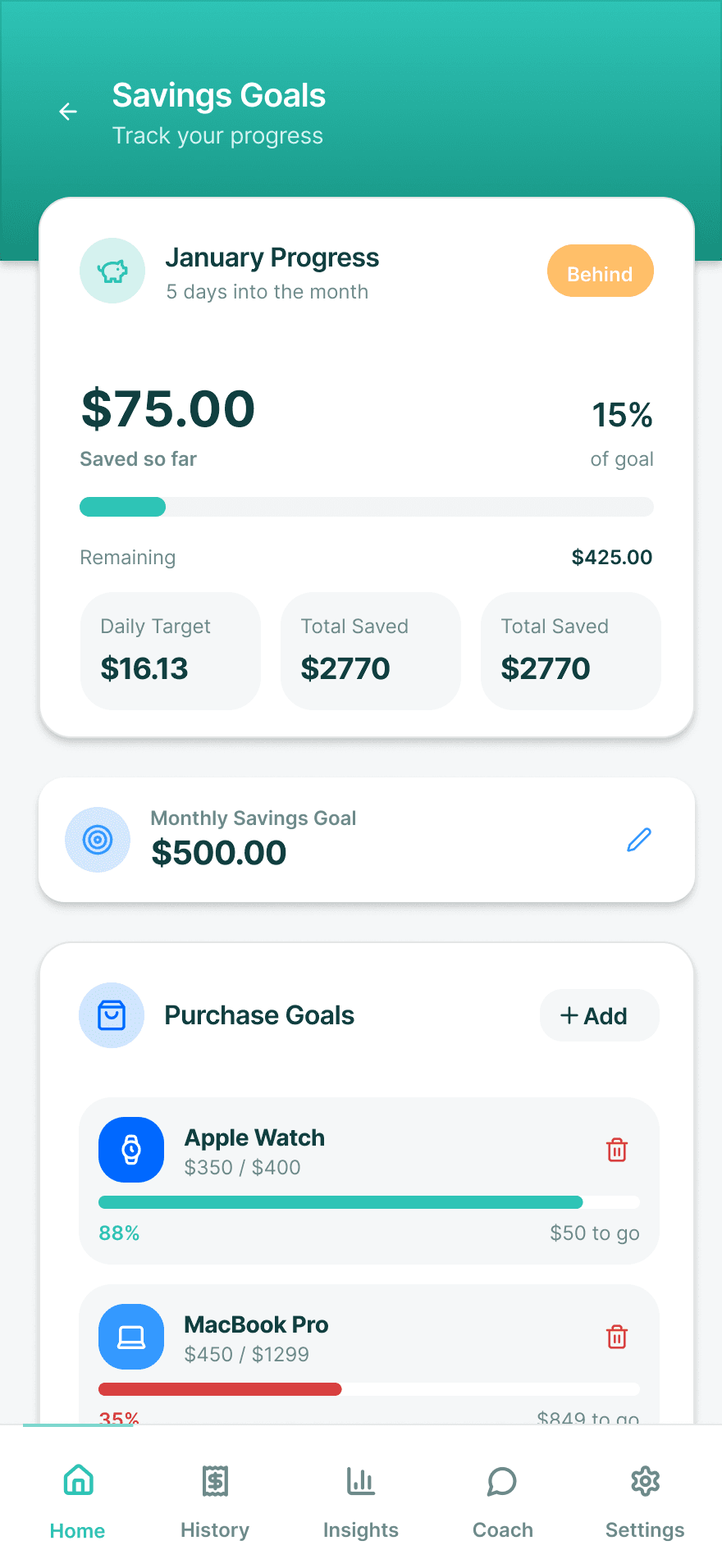
"I want to be able to add goals such as a watch I want to buy so that I can see how much I've saved for it."
Charles, 32
Working Professional
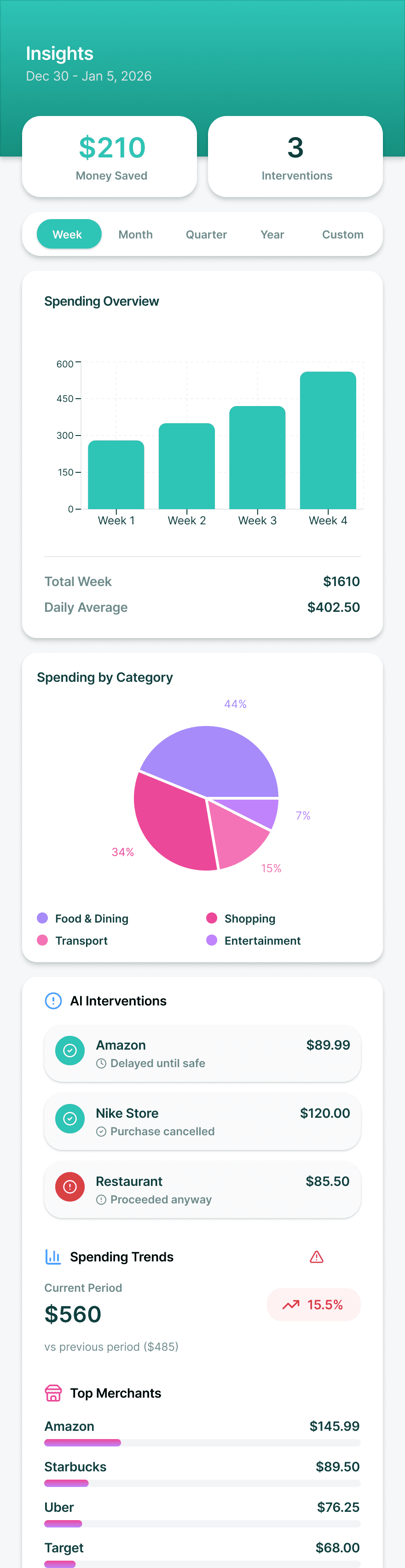
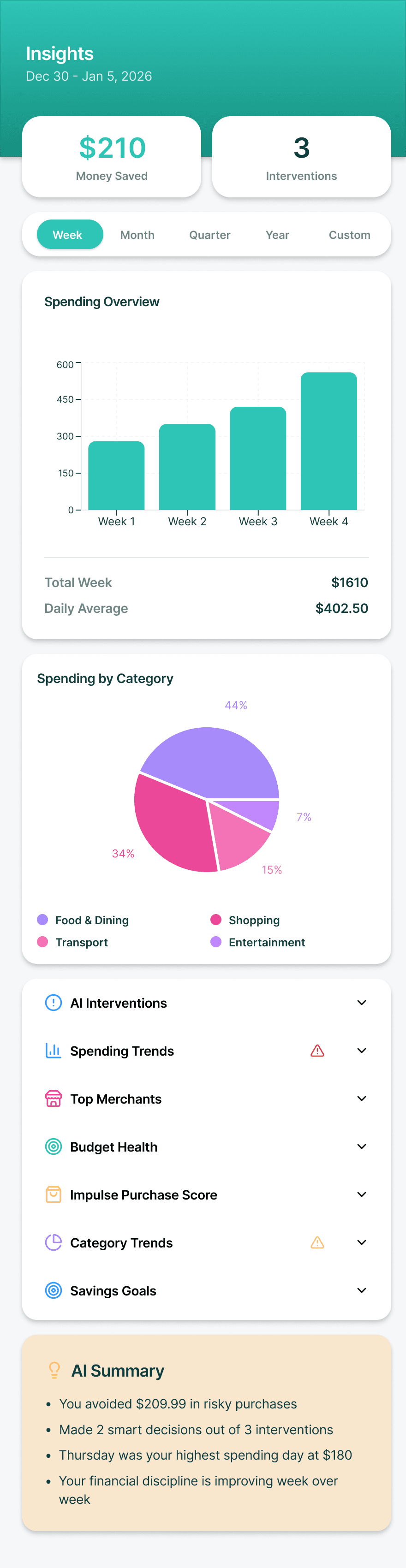
"The insights have too much info all at once and I have to scroll to find the charts I want to look at."
Solution
Before
• Charts/Visuals were all clustered
• Users needed to scroll a lot
• Hard to find a specific analytics
Before
• No option to add goals
• Summaries are disjoint
• Space not used optimally
After
• Implemented the accordian
• Kept important metrics at top
• Accessible on-demand metrics
After
• Added option to add goals
• Moved grid summary to main
• Improved visual guidance
Typography & Color Pallete
Typography
Display / 56px
Aa Bb Cc
Heading 1 / 48px
Aa Bb Cc
Medium
Heading 2 / 36px
Medium
Aa Bb Cc
Medium
Heading 3 / 24px
Medium
Aa Bb Cc
Medium
Heading 4 / 20px
Medium
Aa Bb Cc
Medium
Body Large / 18px
Regular
Aa Bb Cc
Regular
Body / 16px
Regular
Aa Bb Cc
Regular
Small / 14px
Regular
Aa Bb Cc
Regular
Inter · Sentence-case microcopy · Large numerals for money
Inter · Sentence-case microcopy · Large numerals for money
Color Pallete
#0E3E3E
#0E3E3E
Dark Teal
Dark Teal
#22EECC
#22EECC
Bright Cyan
Bright Cyan
#158F7E
#158F7E
Deep Teal (Primary)
#158F7E
Deep Teal (Primary)
#F5F7F8
Ghost White
#F5F7F8
Ghost White
#FFBF69
#FFBF69
Golden Apricot (Caution)
Golden Apricot (Caution)
#D84040
#D84040
Crimson Red (Risk)
Crimson Red (Risk)
Typography & Color Pallete
Impact & Results
~35%
Reduction in Impulsive
Purchases
Impact metrics are based on behavioral finance research, competitive analysis, and design validation through user scenario testing and concept feedback sessions.
Impact metrics are based on behavioral finance research, competitive analysis, and design validation through user scenario testing and concept feedback sessions.
Based on research showing 30–40% behavior change when users receive contextual prompts at critical decision moments.
2-3x
Increased Savings Consistency
~65%
Higher Financial
Confidence
Users with automated coaching systems save 2-3x more consistently than those using passive tracking apps (industry benchmark)
Proactive guidance reduces decision anxiety and increases user confidence in spending choices (based on similar interventions)
~35%
Reduction in Impulsive
Purchases
2-3x
Increased Savings
Consistency
~65%
Higher Financial
Confidence
Based on research showing 30 to 40% behavior change when users receive contextual prompts at critical decision moments.
Users with automated coaching systems save 2-3x more consistently than those using passive tracking apps (industry benchmark)
Proactive guidance reduces decision anxiety and increases user confidence in spending choices (based on similar interventions)
Impact & Results
~35%
Reduction in Impulsive
Purchases
Impact metrics are based on behavioral finance research, competitive analysis, and design validation through user scenario testing and concept feedback sessions.
Impact metrics are based on behavioral finance research, competitive analysis, and design validation through user scenario testing and concept feedback sessions.
Based on research showing 30–40% behavior change when users receive contextual prompts at critical decision moments.
2-3x
Increased Savings Consistency
~65%
Higher Financial
Confidence
Users with automated coaching systems save 2-3x more consistently than those using passive tracking apps (industry benchmark)
Proactive guidance reduces decision anxiety and increases user confidence in spending choices (based on similar interventions)
~35%
Reduction in Impulsive
Purchases
2-3x
Increased Savings
Consistency
~65%
Higher Financial
Confidence
Based on research showing 30 to 40% behavior change when users receive contextual prompts at critical decision moments.
Users with automated coaching systems save 2-3x more consistently than those using passive tracking apps (industry benchmark)
Proactive guidance reduces decision anxiety and increases user confidence in spending choices (based on similar interventions)
WCAG-compliant color contrast
WCAG-compliant color contrast
Plain-language financial explanations
Plain-language financial explanations
No reliance on color alone to convey risk
No reliance on color alone to convey risk
Inclusive tone (no guilt, no shame)
Inclusive tone (no guilt, no shame)
Opt-out and override options for all interventions
Opt-out and override options for all interventions
Accessibility & Inclusion
Accessibility & Inclusion
Key Learnings
Key Learnings
Behavior change happens at decision moments
Behavior change happens at decision moments
Less UI can be more impactful than more data
Less UI can be more impactful than more data
Financial tools must feel supportive, not punitive
Financial tools must feel supportive, not punitive
Timing + context > dashboards
Timing + context > dashboards
01
02
03
04
05
Usability testing with real transaction scenarios
Usability testing with real transaction scenarios
Personalization of coaching tone
Personalization of coaching tone
Integration with wearable / voice assistants
Integration with wearable / voice assistants
Expanded financial literacy modules
Merchant-level intervention logic
Usability testing with real transaction scenarios
Usability testing with real transaction scenarios
01
02
Personalization of coaching tone
Personalization of coaching tone
03
Integration with wearable / voice assistants
Integration with wearable / voice assistants
04
Expanded financial literacy modules
05
Merchant-level intervention logic
Next Steps
Next Steps
Conclusion
Findo reimagines personal finance as a real-time coaching experience rather than a tracking tool. By intervening at the moment of impulse and explaining financial consequences in human language, it helps users build intentional spending habits without complexity or shame.
Findo reimagines personal finance as a real-time coaching experience rather than a tracking tool. By intervening at the moment of impulse and explaining financial consequences in human language, it helps users build intentional spending habits without complexity or shame.